

Akasha Seeds
Evening PrimroseCommon
Evening Primrose
CommonPerennial
Ecologically Grown
Couldn't load pickup availability
Oenothera biennis
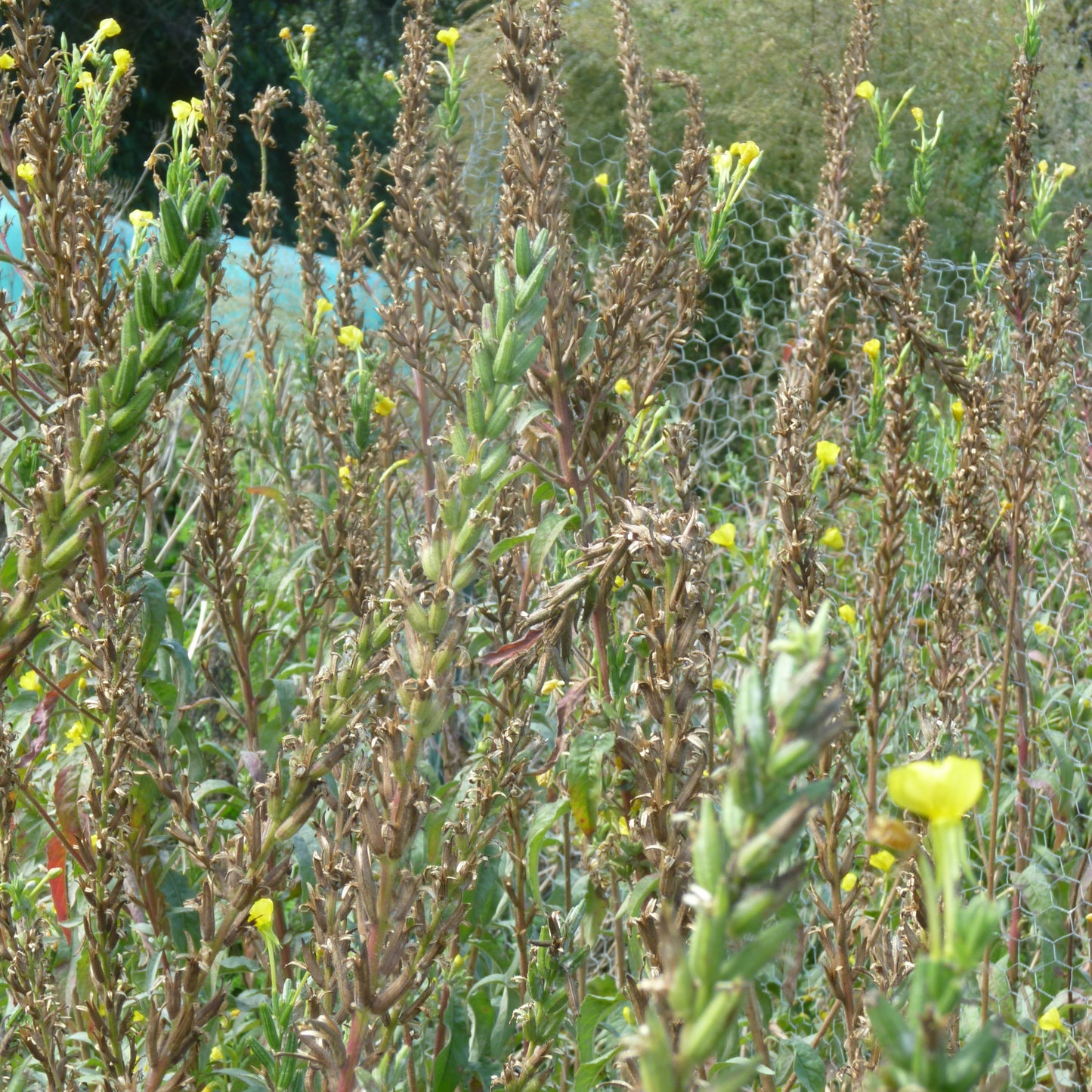
Self-seeding overwintering annual or biennial with bright yellow flowers that open at dusk. The full-sun loving plants grow up to 4 feet and can thrive in varying soil conditions. The roots can be eaten as a vegetable, the shoots as a salad, and the leaves as a leafy green. The seeds are abundant in gamma linolenic acid (GLA) and when taken as a supplement to what the body naturally produces, help to reduce inflammation in rheumatoid arthritis, alleviate PMS and menopausal symptoms and improve skin conditions. Traditionally used by Indigenous people in infusions as an astringent and sedative, and as a salve to treat topical wounds and hemorrhoids. A general tonic and immune system booster. Attracts many hummingbirds and other pollinators.
A note about germination rates for Native Seeds
Our native seeds are not germination tested, as both germination rates and time to germination can vary significantly compared to commercial seed varieties. Many native seeds require specific pre-treatments—such as cold stratification, exposure to light, or temperature fluctuations—to successfully germinate.
Additionally, many native perennial plants may take several years to mature and begin flowering.
For best results, please refer to our Growing Tips for strategies to support successful germination.
Tips for planting out native seeds:
- Sow your seed in the Fall, as Nature would. If you don’t want to be patient, then putting your seeds in some damp soil in the fridge for 4-6 weeks can also help germination as they benefit from a cold period.
- While there are technical tips that can be followed for each native species, we find generally good success by sowing seeds in a pot of sterilized potting soil in early Fall, and sinking the pot or tray into the ground in your garden where it can stay for 1-3 years.
- Cover your seeding tray/pot with a fine wire mesh to keep out mice, squirrels, rabbits, cats and other critters who may want to nibble seedlings or dig up the nice potting soil.
- When seedlings emerge in the Spring, prick them gently out with a fork once they have two sets of leaves (this indicates good root development so they survive transplanting better), then transplant them to their final location and water in well.
- Leave the pot in place, and over the next couple of years it’s easy to continue pricking out new seedlings to transplant as they emerge.
Share